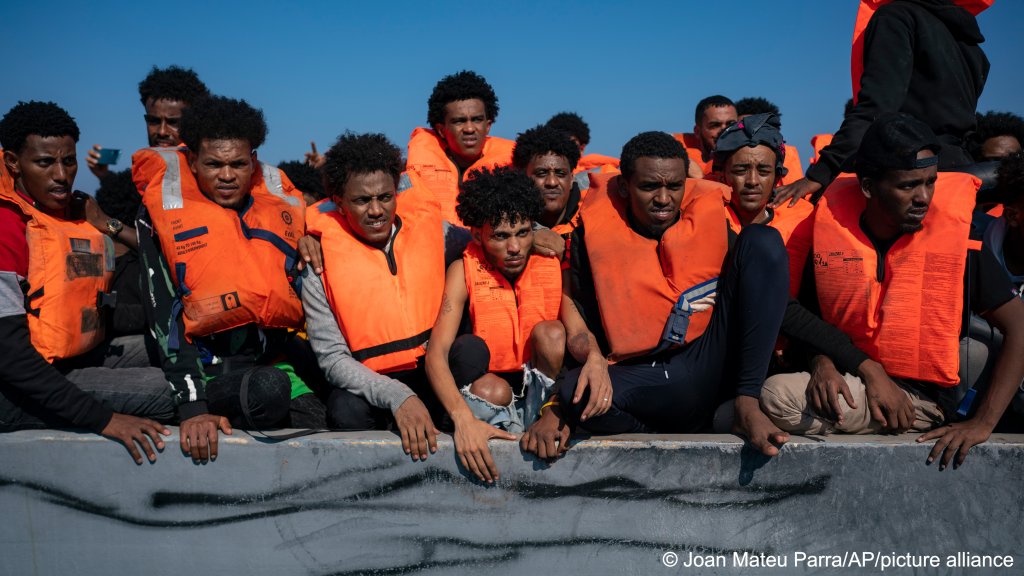
The International Organization for Migration (IOM) announced in its weekly report last week that about 500 migrants — including 29 women and 15 minors — had been intercepted by Libyan officials at sea and returned to Libya in the week of August 10-16.
The majority of the migrants — 426 — notably had departed from the western part of the country, which is run by the internationally recognized Government of National Unity (GNA) based in the capital, Tripoli.
Another 65 had left from coastal areas under the control of the de facto rival government under the leadership of military strongman Khalifa Haftar.
These numbers will continue to preoccupy European governments, as further arrivals from Libya might be due in the coming weeks, while the weather conditions across the Mediterranean Sea remain relatively mild for smugglers to organize boat depatures
According to the report, around 400 people are known to have lost their lives on this section of the Central Mediterranean sea route, while another 318 remain missing from confirmed shipwrecks and other incidents at sea since the beginning of the year.
Rights groups, however, believe that the number of those who perished is far higher, as many of the departures from North Africa are unnoticed or unreported.
Meanwhile, there have been 14,554 cases of interceptions at sea by authorities from Libya, which resulted in a return to the North African country.
Close to 500 of them are children, with slightly under 10 percent believed to be women.
Thousands continue to arrive in Italy
On the opposite end of the Mediterranean, meanwhile, Italian government data updated August 25 shows that 40,510 migrants have reached Italian shores after departing from North Africa since the start of the year.
Earlier data from UNHCR from August 18, when the total was nearing 40,000, indicated that the majority, a total of 34,389 migrants, had reached Italy after leaving from Libya, while just short of 3,000 had departed from Tunisia.
Another 733 had left from Algerian shores, according to UNHCR.
While overall irregular immigration numbers from across the Mediterranean are down, certain regions in Europe continue to battle with disproportionate arrival rates, with the patterns of migrant journeys constantly changing and smugglers adapting